Showing posts with label Teaching. Show all posts

Sunday, April 24, 2016

Learning to Trust the Core: My Weekend with the #CoreAdvocates

I feel very fortunate to have spent the weekend with some amazing math educators from all over my state, digging into the Common Core State Standards. Even though the standards are in their sixth year and we've certainly seen a shift in many classrooms towards a new way of teaching, I think we've all seen that the kinks definitely aren't worked out and there are lots of people who are still reluctant. In all honesty, who could blame them? When you've been doing something for a long time in a particular way (not to mention being a student who learned a particular way), it's difficult to feel like you're being asked to reinvent the wheel. When a huge part of your evaluation is based on a multiple choice test, hard choices sometimes get made. You hope you're doing what's best for kids and try to trust your own professional judgement. 


[Brief aside: I feel so lucky to have taken the path I did to education. My graduate advisor, Dr. Jean Schmittau, was someone who was truly ahead of her time. She advocated for conceptual, student-centered teaching for decades before the words "Common Core" were ever utter together and truly pushed her students to think deeply about mathematics and pedagogy. Let's put it this way....one of our assignments was to make a concept map that showed the concept of multiplication and it's relation to the body of mathematics as a whole. I had to go to Kinko's to get mine printed because it was roughly 5 feet wide. We spent almost a month of 3 hour classes trying to answer the question "What is multiplication?" and often we were given another week to think about it because a room full of people with pure mathematics degrees didn't answer her well enough.  She and the wonderful members of my cohort shaped me into a teacher who is always seeking to improve and challenge myself and my students. I was reminded of her in so many ways this weekend. ]

We opened the weekend with this big question:

Why are we here? 

Pretty existential, right? We were challenged to examine that question from 3 different perspectives and I couldn't think of a better way to share all that's swirling around my brain right now.

Why are we HERE? 
There is something so valuable for a teacher's soul when they are able to congregate with like-minded people in a neutral site. You are able to immerse yourself in a world that centers around what you're studying and have discussions that might be difficult in a place you are too "comfortable." It may seem small, but I think it's a huge part of what makes conferences so powerful.

Why are WE here? 
 A topic that came up over and over again this weekend was the idea that teachers need to "own the standards." It's a picture that I think holds a lot of power in education. If we truly "own" what we are teaching and examine it as practitioners, we will be cognizant of how these standards connect with the conceptual structures our students have created in their schooling. A huge part of this is creating teacher leaders and I was happy to be in a room full of them. I honestly believe that these people are the key to any real change- teacher leaders need to buy in to it and model that these changes can be effective. Ideas that teacher leaders can demonstrate are good for kids (and good for teachers) are the ones that spread like wild fire. 

One aspect that we discussed was the idea of thinking critically about our own instruction and that of our colleagues. My biggest concern about doing this as a department is always that people will feel they are begin "evaluated" if the proper level of trust isn't established beforehand. Teaching is so deeply personal and it takes trust in your peers to allow them into your room to reflect on both your teaching and their own. But what if you do? The trust, collaborative spirit, and sharing of ideas that could happen is almost unfathomable and contrary to the isolationism of teaching in the past. It's using the 21st century skills we ask our students to have every day.

One of the things I'm taking away from the weekend that I felt most passionate about was a really powerful tool to help start these conversations among mathematics coaches, administrators, and peers. 


This tool provides feedback on what I would consider the 3 most important aspects of any lesson: alignment to standards, appropriate selection of instructional strategies, and student opportunities to engage with the mathematics. Digestible language, jumping off points for conversations, and no wording that rings of "judgement" of the teacher....love. We discussed using it as a goal setting tool in our PLC's and as a tool to start to generate trust among a department. It's something I'm carrying with me as I continue to pursue teacher leadership in mathematics.


WHY are we here? 
I consider myself someone who is pretty well versed in the Common Core, as my master's
centered around conceptual teaching and I completed it right before the Common Core was implemented. We used the standards as our textbook. I've got to be on the savvy-iest end of things, right?
 
WRONG! But let's be honest, I didn't know what I didn't know. 


http://www.360results.com.au/wp-content/
uploads/2013/06/tumblr_mh6eljSrzR1rx06nvo1_500.jpg
The picture here rings so true to me....we examined the standards as a whole, not just our own grade level. And more importantly, we examined them from a perspective of 2 of the 3 major shifts- Focus and Coherence.  So often as teachers we are focused on the "checklist" of topics we need to teach, the day by day "calendar" we've created, and not looking at what's happening outside our own course. For this weekend, I hit "pause" on my high school teacher mentality and tried to examine the standards from a mathematics educator perspective. 

Here's my biggest takeaway from this weekend:


We need to learn to trust the standards. 

The key word I've started to imagine with the regards to the standards is this: design.  These were written, revised, and critiqued by people who have spent their careers immersed in mathematics education. These were designed intentionally to create a cohesive understanding of mathematics that balances conceptual understanding, procedural fluency, and applications.  They are saying this: "Trust me. There is a method to my madness." These were my "ah-ha" moments: 
  •  Situation: A 3rd grade teacher who is introducing multiplication teaches how to "carry" because it makes it so much easier for students to multiply big numbers!
    • Explanation: This teacher is trying to do right by their students. They are trying to give them a strategy that will always work. However, in doing so, they're neglecting the coherence that is built in the standards to really develop students' conceptual understanding of multiplication so they can apply it later. Fluency with the standard algorithm for multiplication isn't expected for 2 more years (5.NBT) and if we introduce a "trick" like this too early it can actually be a detriment to the understanding our students are building. 
  • Situation: A teacher is so used to teaching surface area in 7th grade that they continue to teach it. It's in the textbook, right?
    • Explanation: The core of the major work in elementary school is focused on developing students' understanding of number and operation. Geometry can be a tool to do that, but it is regularly listed as a supporting standard. This doesn't mean it should be ignored; it just means it can be used as a lens through which you can refer back to the major topics. It isn't until 8th grade that a geometric topic is considered part of the "major work" and with good reason- the lower grades are trying to go deeper into content. As we advance in the grades, we can have a wider focus. Surface area formulas are not specifically memorized in any grade because it lacks the conceptual basis that the Common Core demands. Just because it's in our textbook doesn't mean it needs to be our focus.
  • Situation: High school teachers have always heard that there is supposed to be "less content" in the Common Core, but our courses seem to be even more jam packed.
    •  Explanation: The high school standards were not written to decrease the amount students learn each year. This was never their intention. By focusing on fluency in the younger grades, high school is able to become a time where concepts are connected. Mathematics is a story and high school is the time when we weave together all of the plot points.
These standards were not written arbitrarily. They have a plan and every teacher has a role to fill to make sure students are getting the most from the instructional shifts. We need to see ourselves as part a whole; we are a K-12 team that is created to support the success of each individual student. Synergy, synergy, synergy.

This is by no means comprehensive of all the things I'm leaving this weekend having learned, but it's certainly where my mind is focused right now. I feel so inspired to keep learning and leading and I'm grateful I was able to be explore so much this weekend!

Friday, February 19, 2016

Tasks vs. Projects in Calculus

So it's Friday afternoon and in an effort to really knock one out of the park (and avoid the pile of ungraded tests staring back at me), I have some serious thoughts going on about my next Calculus PBL, which I am trying to design with a fellow AP Calculus teacher at my school. I am lucky enough to teach in a STEM program that received a huge federal grant and, as a result, has access to lots of things others don't. Too often I'm thinking of ideas without enough time to actually go through the enormous process that is ordering anything through aforementioned federal grant. So here goes nothing:

Disclaimer: This is a brainstorm....brain dump....random collection of ideas that I hope other amazing AP Calc teachers might be able to expand upon? I offer no solutions in this post...just questions.

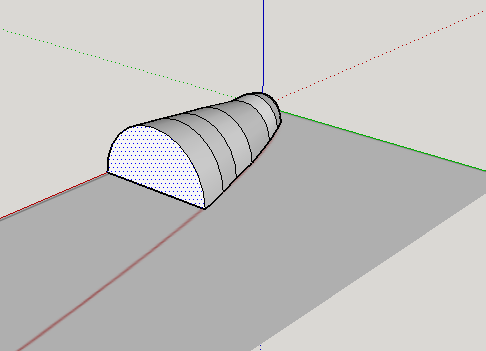
We are getting 2 new 3D printers next week and have a training on using them (YES!) and there is obviously a direct relationship to all the applications of volume we discuss in AP Calc. I've done some searching....which always just leads to more questions and ideas. I started from watching these 2 videos:


Solids of Revolution
NCTM Performance Task
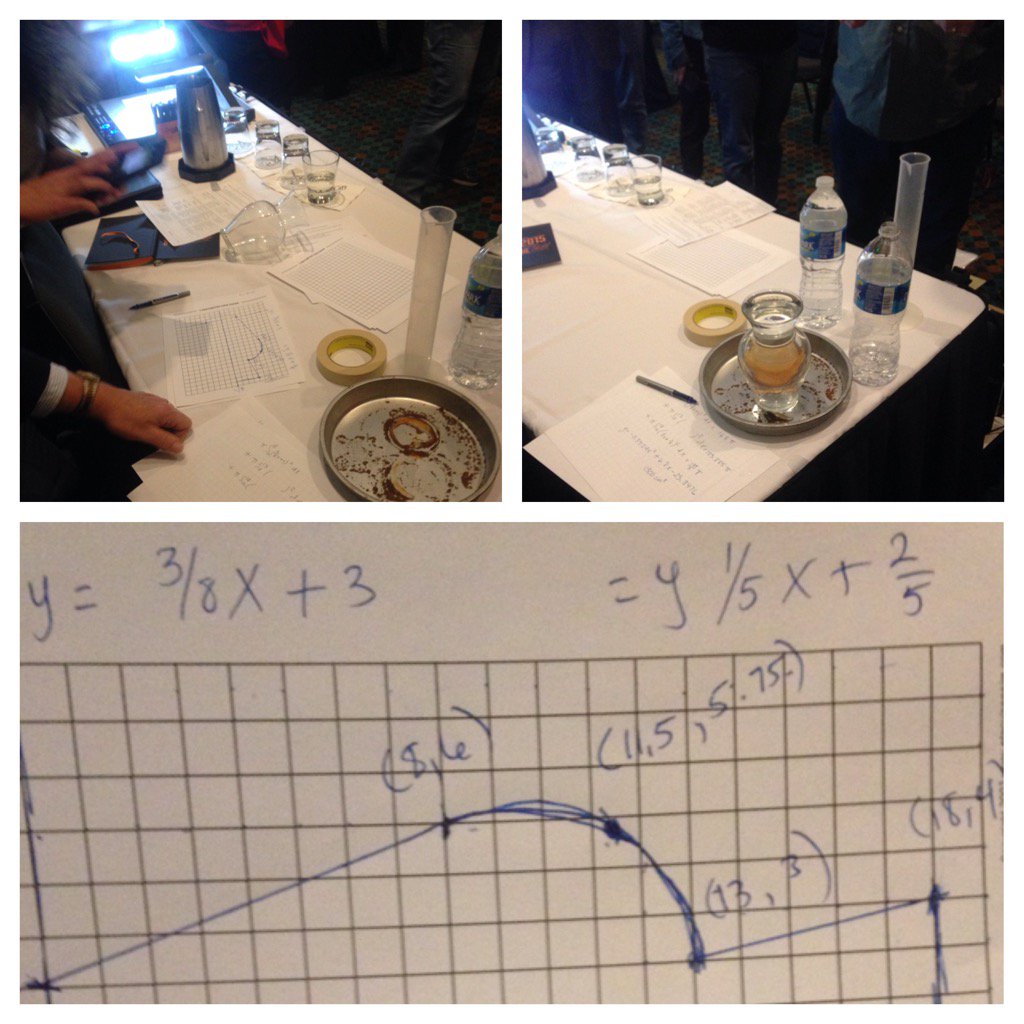
This possibility seems like more of a logistical issue than a conceptual one. I know how to make this a demanding task for kids and have seen amazing applications- from the "Goblet Design" project from my wonderful coworker or the vase volume performance task I had the opportunity to play around with at NCTM Nashville (shout out to Brett Doudican from Coordinated Achievement on this one). It would be fun to 3D print these to scale and then use displacement to check the accuracy of our volume calculations. There are so many ways to give kids constraints and have them develop something amazing. It's task-based and, more importantly, not a project for the sake of doing a project. 


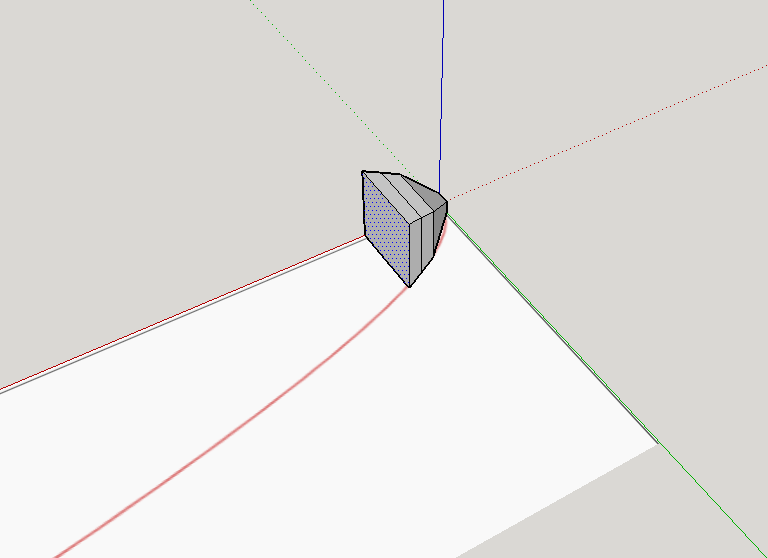
Cross Sectional Volumes

Logistically, I actually think this is easier. In about 15 minutes of playing around I was able to create 2 designs that would model different cross sections. My kids have experience with 3D printing...this wouldn't be mind blowing for them.  My struggle is having them print 3D models seems like the thing I hate most....a project for the sake of doing a project. Might it be a fun way to spend some time after the AP exam? Sure. But if I want to invest any time in this, I want it to be something that's worthwhile mathematically as well. I want something that can be low-floor, high-ceiling since our school ranges in ability level from Honors Calculus to BC Calculus (to a kid who is taking an MIT Quantum Physics MOOC for fun....seriously). Can you tell that I have lofty goals here?

So here's where I need my MTBoS friends...

What sort of tasks and applications do you associate with this topic?

I want to do more than just create a model, so how can I challenge my kids with creating a model within given constraints and do it meaningfully? My coworker and I have been trying to think of how to get kids to apply this concept in the real world and really use the model to serve a purpose. 

Please feel free to share, comment, and question!! We promise to tell you where this road leads us and share any resources along the way!  

Thursday, September 24, 2015

Rational Functions Challenges!

I always find my Pre-Calculus class the most challenging to teach at this time of year. Yes, even more so than prepping for AP Calculus for the first time and teaching a blended class with 50 students and about 10,000 things to grade every night. 

Why, you ask?

We run on block scheduling and there are few things which I think are more of a challenge for mathematics teachers than the gaps in background knowledge that happen from skipping semesters (or YEARS) of math in high school. By the time the kiddos get to me in 11th or 12 grade, all those "must know" skills have been forgotten. My goal is to try to remind them of those skills without having to reteach the concept completely. I know it's in there....we just need to bring it back to the surface!

We are currently studying rational functions, a topic which is so vital to their study of limits and later calculus. The whole idea of discontinuities....so important! 

This year for some of the review topics, I'm using some classroom flipping (with videos I made with Educreations). Kids who remember the material can speed through these and demonstrate mastery while kids who need the extra remediation have the opportunity to get it. My kids had 2 "flips" last night- a brief video on holes vs. asymptotes and one on horizontal asymptotes. Having the preview of these topics allows me to group the kids strategically and have them really practice in class. 

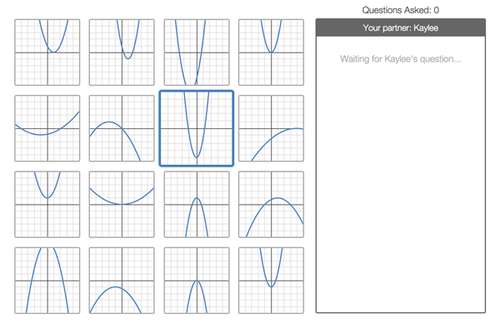
Desmos PolyGraph Activity 
Think "Guess Who?" for functions (the one pictured above is quadratics)! I loved that it let me move around the room and assess the comfort level with mathematical vocabulary.

We had a big discussion about what questions would be considered appropriate for pre-calculus level students. Here's what we decided...


From the teacher perspective, I could follow each conversation and make sure they were using academic vocabulary. I was able to circulate around the room and listen and ask probing questions to kids who needed it. It was competitive, but fun! Every single one of my students said on their feedback form for the activity they'd want to do it again.

What the kiddos are saying....


"It made me really think about the characteristics of the graph/function."

"It was fun and helped strengthen my math terminology" 

"I like the fact that you can ask questions to better understand the topic and also get asked the questions. It's easier to understand and more fun with being partners with some random person :)"

"It was a fun, creative way to show what we know with out the stress of a quiz, or test."

Once I felt confident that they had mastered the vocabulary and were ready for more collaborative practice,  the students had to complete a graphing mini-project on my giant laminated graph paper! The first 2 questions were a mini-review from rational expressions and equations and the 3rd was the actual mini-project.


Now to grade them all....
(Is the domain and range bothering anyone else?? Have some more work to do with that group, still!)

Monday, March 18, 2013

One of Those Days...

I've been watching way too much Keeping Up With The Kardashians in an effort to numb my brain during end of quarter grading, so here it is, the peak and the pit of today.

Pit: The server goes down. In the middle of 5th period. For 2 periods. When I have tablet and Smart Board activities planned for all! Coworkers lost all files. Thank you, Dropbox, for saving my life. 

Peak: My Geometry class bringing a staples "easy" button to class and it exclaiming "That was easy!" every time we successfully finish a tough problem. Special right triangles ain't never been so much fun. 

Notice...the peak is the kids. The pit is all the other nonsense. 


Thursday, February 14, 2013

A Geometric Valentine's Day

We're just digging into geometric mean in Geometry and the inevitable question of "Why are there 2 types of means?" always arises. 

Here's a timely explanation of one way math & geometric mean are used in real life....just in time for Valentine's Day!

Happy Valentine's Day to all of you!

Update: Discussed this with my class last period...they immediately wanted to know if I used eHarmony or Match.com (despite the fact that they know I'm in a long term relationship) and which was better. They decided they should probably test both to figure out which one worked better.  I guess I'm glad they're trying to test their conjectures? Scientific thinking at its finest. 

Tuesday, February 5, 2013

Mathematical Bakery

Working with generalized proofs today, we ran into a problem that said (a+b)(a+b)...we were using the distance formula. Oh the crazy answers I heard from my Geometry students!! Sure, we haven't done a lot of multiplying of binomials this year, but still....I was a bit frightened. I explained to them that at the end of this year we're going to do a pretty hefty Algebra review to make sure they're in shape to take Algebra 2 next year. I told them "factoring is cake compared to what you'll see there!" The following conversation ensued:

Student 1: "So....you're saying Algebra 2 is like a scone?"

Me: "What??"

Student 1:" Well if factoring is cake, Algebra 2 is a scone....it's a little harder."

Student 2: "Pre-Calculus must be like a stale scone!"

Student 3 (from across the room): "And Calculus is like a really hard loaf of bread!"

Student 1: "Good thing we have studying...that's our coffee! We can dip our scones into it and it will soften them and make them taste better."

Student 3: "I don't think I'm going to study in Calculus."

Me: "Why not?"

Student 3: "Because....old bread dipped in coffee? Gross."

Groups of kids like that remind me why I love my job, especially on the days when you're ready to hide under your desk.

Wednesday, January 2, 2013

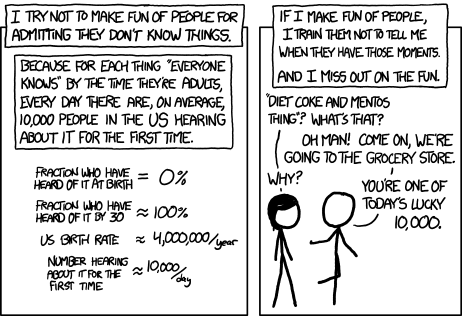
Isn't This Why We Teach?

A little remind as we return back to the insanity that is January/midterms/trying to channel 12 year old energy after Christmas:


From xkcd, one of those sites I never leave without smiling!

Saturday, December 29, 2012

A Very Fractal Christmas, Part II

Here enjoying my last (very snowy) night in the northeast before heading back to warmer weather and lesson planning tomorrow, but I had to share how well our tree came out!!


All in all, it was about 3 feet tall and the kids were so excited they offered to come in before and after school to finish it. A great end to a long first semester!

May everyone have a happy new year and enjoy the fresh start January brings with the kiddos! 

Wednesday, December 19, 2012

A Very Fractal Christmas

Today is our last real day of classes before the break and, as would be expected, most classes have a test or quiz. Tomorrow we have the parties and the annual Christmas dance and then we'll have 10 glorious days off! One of my classes somehow got a day ahead  and took their test yesterday. I was at a loss of what to do with them until I found this great idea: build a 3-D fractal Christmas tree! I plan on introducing the idea with this video and seeing where it goes from there!

I'm looking forward to seeing how it goes, especially since this is one of my more challenging groups behaviorally. The fact that they get to do this when no other class does might just be privilege enough to motivate them!...or let's hope that, anyway!

Will update more this afternoon with pictures!

Tuesday, December 18, 2012

Aftermath of Sandy Hook

It's taken me 5 days to even begin to form words about what happened in Connecticut last week. As a teacher, as a person born in Connecticut, and as a human being, I have absolutely nothing but prayers and sorrow for all the families affected by the tragedy. I now live hundreds of miles away, but my school was personally touched by the tragedy and had to watch a familiar name on the nightly news reported as deceased. She was 6. Needless to say, my heart is broken.

I had been with my children the whole day on Friday and had seen nothing more than the email asking us to shelter the students from the news until they could be reunited with their parents. When the teachers were finally told the severity of what had happened, we cried together. We prayed together. We were in disbelief. 

The return to school Monday was more emotional than I ever could have expected....more tears, more prayers, but also a profound sense of gratitude. As I walked out of my weekly  staff meeting, eyes filled with tears, I was greeted with the faces of our own beautiful children. I got to see Pre-K students run and play; I got to laugh with my 8th graders about their weekend antics. It was a transcendent feeling...like I was floating above all of the work and exhaustion and stress and just being with my students. I knew why those brave teachers reacted they way they did....we love our children. 

Daniel Willingham wrote a blog post this week about guns in schools, namely whether school officials still have them. While making interesting and profound points (as Willingham is wont to do), Willingham said the following:


We love to teach because we love to communicate to students the beauty of the world, and to help them see beauty they did not know was there. We love to teach because teaching is about creation: the creation of new knowledge, the creation of better minds, and yes, the creation of a better commonwealth, nation, and world. We love to teach because we want to build--to build competence, self-confidence, and character in our students. 

 And he's right. By doing what those teachers did, they did exactly that. They showed all of us the beauty of our world- the beauty of a brave few who were willing to give their lives to protect the innocent. They created a future for their students. They are truly heroes and I feel proud to be a teacher knowing I share the profession with such a passionate and selfless group of people. 

RIP to all the victims of Sandy Hook. You and your family are in our prayers. 

Tuesday, December 4, 2012

Proofs by David Bowie

When I was in college, I felt like proofs had personality. I have no doubt this came from years of pouring over them- from intrigued amusement to hopeless despair (I'm talking to you, hyperbolic planes). They joined the list of mathematical characters friends and I would create to numb some of the mathematical stress: the Jacobian who liked going on African safaries, the data my professor loved to put in the freezer, the triangles evil cousin Cryangle. And proofs? These were just some:
  • The cute little ones which were made you giggle....toddlers, anyone?
  • The elegant ones which so effortlessly seemed to make such a profound impact. These were definitely always wearing elbow length ladies gloves and pearls.
  • The beastly ones that took up a lot of space without really saying anything. Any Planet Fitness members out there? These made my inner lunk alarm go off. I usually walked away going..."Well that's just dumb!"
  • The ones with a trick up their sleeves. These always struck me as the salesmen of the group.
  • The wise old grandfathers....proofs by induction. Figuring out what we definitely know is true. Building on that experience. These always seemed so reasonable to me. 
  • The ones that are just really, really, really annoying. 
Then there was my favorite type...the smart, sassy, sarcastic ones....indirect proofs. The let you think something was true until BAM...they proved you wrong. They had attitude. They were the Real Housewives of my mathematical world. 

My students have not spent the endless hours pouring over proofs that I have and they also haven't needed such a mental break from the stress of a 500 level math class that they would begin to understand these characters. However, I wanted to do my favorite proofs some justice and let the kids do some exploring.

I set up 2 stations:
1) A set of sudoku puzzles 
2) This video from the 1980's movie The Labyrinth

1, 2, 3....

DEBATE! CONJECTURE! CONTRADICTION! 

All of this, of course, after the debate and conjecture about Jim Henson and David Bowie. Middle schoolers of 2012 cannot fathom the 1980's.
 

Great first day of the lesson. Wrapping it up tomorrow with discussing how we gave hypothetical conjectures, then tested them to try to see if there was a problem with them. 

Tuesday, November 27, 2012

Word of the Week: Centroids

Each week I have my students for a Math Lab. This was supposed to be an extra enrichment or intervention period, but it's turned into organized chaos. I have 20-30 students in 3 different courses all vying for help and attention. It's that class that I dread leaving for a sub....chaos. 

My Geometry students are at the top of the food chain and it breaks my heart to give these critical thinkers "drill" practice when they could be exploring. Today was one of those days when you're not sure if an activity it will bomb or fly. And this one? It flew!

We have been studying centers of triangles (orthocenters, incenters, centroids, and circumcenter). This has had 2 highlights for the kids: a foldable that they used to keep them all straight and giggles when one student kept slipping and saying "circumcision" during an oral presentation. They are always cooperative and brilliant, but I wanted to give them some reference into why this stuff might matter. Good thing I spent 3 semesters of college teaching physics! Centroids.....centers of gravity....suspending random objects around the classroom? Sounds like it's worth a try. 

I used this video on center of gravity to introduce the topic. One their interest was piqued, this video related the information to our chapter. I had each student design a triangle out of cardboard and find its centroid, then suspend it. Then they had to find some weird shape other than a triangle and try to find its center of gravity. Can you find a centroid for that? How is it alike and different? All questions to be examined! 

Anytime you get to hear "whoa!" and "that's so cool" is a good day in my book. I had to shoo students out of the room when the bell rang and we spent the first minute of class later that day balancing our triangles on smaller and smaller points around the room. One student got it balance on the head of a pin....he took it home because he just HAD to show his parents. Here's a great activity that I wish I had thought of before today....could have been integrated nicely. 

The only problem? The 20 Algebra students I had in the class found it nearly impossible to focus on their linear equations project with all excitement! They wanted to build their own centroids and were even starting to use the vocabulary. I love when, at the end of class, I catch students who aren't even in the course watching videos I've posted for other classes (also a problem with Vi Hart's videos!). As I was walking out to my car I found 3 triangles, centroids labelled, that had been made by students outside my class. Love when math leaves the 4 walls of my room! 

Any other ideas for integrating more physics into high school math? Obviously with calculus, but with lower level? Share share share!

Tuesday, November 20, 2012

Giving Thanks

Teachers have a relatively thankless job. We spend 40 hours a week with students who are learning what it means to respect and appreciate. Translation: we sometimes go unrespected and unappreciated. We all have those students in our classroom who try our patience each day, the parents who attack before they ask any questions, and the administrative hoops that must be jumped through. 

After a particularly trying day, I read this article from Edutopia and thought it was a perfect sentiment for Thanksgiving week. The trying people in our lives so often become "bigger" than the people who are doing the right thing. It's sad, really....when so many people are doing the right thing. Let me tell you a little bit about my students:

- I have one student who, on her way out of my classroom, thanks me everyday. 
- I have a student who takes it upon himself to encourage his classmates to be respectful and kind, inside and outside the classroom.
- I have my wonderful basketball team who displayed such amazing leadership during their scrimmage with the Special Olympics. 
- I have a student who, when a friend faced with the typical "middle school" girl drama, told me she'd always wanted to be someone people could go to and she was just happy she could be there for someone else.
- I have a student who spent my first 3 months at the school pushing back on my authority because I was young. Now, a year later, he treats me with respect and amazes me daily with maturity and insight. 
- I have one student who offers me a hug whenever he senses I'm having a bad day
- I have a posse of 7th grade boys who give me all the fantasy football advice I could ever want.
- I have many students who come on time, come prepared, and come ready to learn.
  

And you know what? I rarely, if ever, thank them for that. On a small scale, I try to thank them when they carry something for me or when they check to make sure I've set my line up before the NFL's Thursday night game. But I don't thank them enough for being role models, for being leaders, and for making good choices. It might be a little early for New Year's resolutions, but I know this. One of my goals this year is to thank at least one more of my students everyday. 

Have a happy, safe, and restful Thanksgiving! And a word of advice....Put. The. Grading. Down. 

Sunday, November 18, 2012

Success: Redefined


There are lots of different ways I define success for my students. Yes, I am happy when my they "succeed" on a quiz and get a good grade. This success comes easily to some and only by labor and pain for others. No matter how small the victory, I try to celebrate it with that student. Then there are the times when the student who struggles through math every day makes the game-winning goal at the soccer game. Those moments are just as proud for me and often more enlightening. Getting to see someone at their best makes you re-examine your biases about them- something every teacher needs to do sometimes. Flash to tonight...

I played basketball in middle school. No one said I played it well, but play it (and love it) I did. I am an avid college basketball fan.....including an NCAA tournament trip and quite nearly 1.000 college basketball games throughout my life. So after a wonderful weekend, I spent my Sunday evening at school watching some serious hoops action. The JV and Varsity teams were having their first scrimmages and were also assisting with drills and practice for a local Special Olympic team. 

Tonight defined for me a third type of success....the type where I see my students succeed as people. These 12, 13, and 14 year old students tirelessly walked through drills and talked with people who are very different from them. My students were not afraid or "too cool"; they were inviting, gracious, and supportive. After drills and games, the Special Olympic team scrimmaged for the crowd. My students cheered on every success and supported every failure. They offered hugs and congratulations to all the players. 

One of those moments that reminds me that I teach kids, not math. Really amazing kids. Just something to be thankful for during this Thanksgiving week. 


Tuesday, November 13, 2012

I hate...

I have a weakness. I know it. Everyday I fight it, but I just can't sometimes. Here it is...I got into teaching to teach concepts. I love the exploration lessons that engage students in problem solving and showcase their critical thinking skills. I did not go into teaching with a heated passion for standardized test review, nor did I go into teaching with a strong desire to be asked the same question 15,000 times in a 42 minute period. My students know that a multiple choice test from me means that either myself or a family member is deathly ill....or the Giants are in the Super Bowl and I just can't pull it together to write a thorough test. All of this sounds like a good thing right? At certain times....it is. But what my students do not know is that I dread almost every test and quiz review day.   So my goal has been to find activities that are engaging, provide good practice , and can somehow lessen the mass hysteria known as a room of 28 seventh graders. 

I am strictly anti review packet. The classroom I took over during my first year of teaching left me with students who relied so heavily on these they never learned how to study. I've tried what feels like a million strategies since- with mixed success. One of my favorites is having the students write their own version of the test, complete with answer key. Not only do they get some practice with the concepts, but I get to see what they view as important. I try to sneak the best question or two from the kids' tests on to the actual test....an added bonus for doing good work on the review. 

Cue this wonderful Row Game from Molly Kate at Mathemagical Molly. I adapted it for my Pre-Algebra students. Anytime I heard, "Ms. F, I don't get it!" from Student A,  I would ask Student B if they could tell me A's question. They couldn't? Guess they better work together on it first! This eliminated 98% of the questions and allowed me to move seamlessly from group to group, helping and encouraging. Goodbye gaggle of question-askers, hellooooooo critical thinking and correction of mistakes! 

Anyone have more fun ways to practice that don't make me want to say, "But Mommmm, I don't want to go to school today!"?Any other brilliant ideas for self-checking activities? Happy sharing!

Monday, November 12, 2012

What is Math?

One of the most worthwhile tasks I was asked to do in my graduate course work was write a detailed investigation of the history of mathematics, along with a personal statement detailing my own philosophy of math. My "What is Math" paper is still my baby- that paper you've moved from laptop to flash drive to laptop (to iPad). Maybe it's the sentimental memories of my roommate's dog peeing on my library books in the wee hours as I wrote. Or the fact that my entire thesis was based around the fact that I've seen the movie Inception too many times (more on that later). Somewhere along the line, though, this became what defines me as a teacher. 

So what is math? My investigations led me to some great books  and some interesting theories. To anyone interested, Joseph Mazur's Euclid in the Rainforest seemed the most reader-friendly for those who didn't decide a theoretical math degree was the best path into teaching (I mentioned I LOVE math, right?). Hours of Diet Coke, dance parties in the School of Education computer lab, and mindless babbling to my poor boyfriend later....I was struggling with putting my own theories of mathematics into words. They say the best cure for writer's block is to get your mind off it....so I put Inception into the DVD player and cuddled up with the aforementioned roommate's dog (this might explain the incident that ruined my reputation at the library). And there it was....


"Well, imagine you're designing a building. You consciously create each aspect. But sometimes it feels like it's almost "creating itself", if you know what I mean...Genuine inspiration, right? Now, in a dream, our mind continuously does this. We create and perceive our world simultaneously, and our mind does this so well that we don't even know it's happening. That allows us to get right in the middle of that process."
-Inception

 I grabbed a pen and started writing....

"I believe that at its core the subject of mathematics represents the study of relationships. It is simultaneous perception and creation, which function in an endless cycle. The more we perceive relationships, the more mathematics we are able to create.The more mathematics we create, the more we are able to perceive new relationships."

This has become the way I view my own learning and the way I teach my classes. By studying relationships and patterns, we are able to make conjectures. From these, we are able to perceive new relationships and new patterns. And it's one of the reasons I love my job....getting to see the genuine problem solving and sense of curiosity present in my students each day. 


So think about it.....what is math to YOU? It might just change how you teach! 

"You'll love it...It's like a soap opera everyday"

These were the wise words of a  teacher I observed during my undergraduate work- a time when I couldn't imagine spending 40 hours each week with 12 year olds. But, 5 years later, here I am.....spending 40 hours a week with (and at least 40 more preparing for) my 6th-8th graders in all their awkward glory.

I always imagined myself to be a high school teacher because..well...I LOVE math. And I had my big shot when I got to teach AP Calculus, Algebra 2/Trig Enriched, and a remedial Geometry course. What I learned was that all the things I loved about math were lost on my students. Their excitement for learning had already been lost in the interest of top grades to get into top colleges or the apathy that comes with struggle. They wanted "tricks" and "steps," not to experiment with problem solving or be ready to learn from failure. I found my passion with middle schoolers- the age when everything can be new and exciting, even math!

So here it is...My attempt to marry my loves of teaching, math, and writing. I'll be sharing some of the wonderful strategies, lessons, and ideas I've found and can't wait to start exchanging ones with all of you!
**Photo credit from Pinterest