Wednesday, February 24, 2016

Rationals Slap Jack Review

This year more than ever, I have a wide range of learners in my room. The individual needs of these kiddos means that I need to choose activities that can "run themselves" so that I can take small groups or individuals aside and work with them. Test review days, especially, seem to run this way. 

Here is an activity that I created for our class review today so I could pull together some small groups. I printed them front to back (they line up when printed), then cut a set for each small group:


The rules are this:
  • Students play in 2 vs. 2 games (so 4 students per group)
  • Students look at the 1st card and work with their partner to solve the problem completely on their whiteboard or in their notes
  • First group to have a complete solution written can "slap" the deck to indicate they're done. They then have to defend their answer. If they're right, they get to keep the card. If not, the other group gets a chance to "steal" by getting the question right. 
    • If no one gets it right, the whole group has to work to figure the problem out. No one gets the card, but they're still responsible for the topic. 
  • Group with the most cards at the end wins! 
I also gave each group a stack of red, yellow, and green cups to indicate if they needed help or not. Thank you, Math=Love for this great idea! 

What worked?
  • It's easy to differentiate by removing certain questions from the deck for some groups or by adding in enrichment cards (which I need to get around to making) for the stronger groups
  • I can move around the room or pull small groups aside and the activity flows pretty smoothly
  • Some groups chose to not actually play the game. Instead, they decided to sort them by what was easy and what was hard and go through the harder ones. 
  • The cups!! The cups!! Seriously, if you don't already do this, start. It will stop you from hearing your name frantically 47,214 times in the same period. 

What needs improvement? 

  • I will definitely group more strategically next time. I had 1 or 2 kids who were fish out of water with their group and were scared to use the cup to indicate they were confused if no one else was. 
  • I honestly needed a prize to rush them a little bit more to "play"- some kids take it so seriously, they can't have fun with it
Overall, another awesome day with my kiddos! 

Friday, February 19, 2016

Tasks vs. Projects in Calculus

So it's Friday afternoon and in an effort to really knock one out of the park (and avoid the pile of ungraded tests staring back at me), I have some serious thoughts going on about my next Calculus PBL, which I am trying to design with a fellow AP Calculus teacher at my school. I am lucky enough to teach in a STEM program that received a huge federal grant and, as a result, has access to lots of things others don't. Too often I'm thinking of ideas without enough time to actually go through the enormous process that is ordering anything through aforementioned federal grant. So here goes nothing:

Disclaimer: This is a brainstorm....brain dump....random collection of ideas that I hope other amazing AP Calc teachers might be able to expand upon? I offer no solutions in this post...just questions.

We are getting 2 new 3D printers next week and have a training on using them (YES!) and there is obviously a direct relationship to all the applications of volume we discuss in AP Calc. I've done some searching....which always just leads to more questions and ideas. I started from watching these 2 videos:


Solids of Revolution
NCTM Performance Task
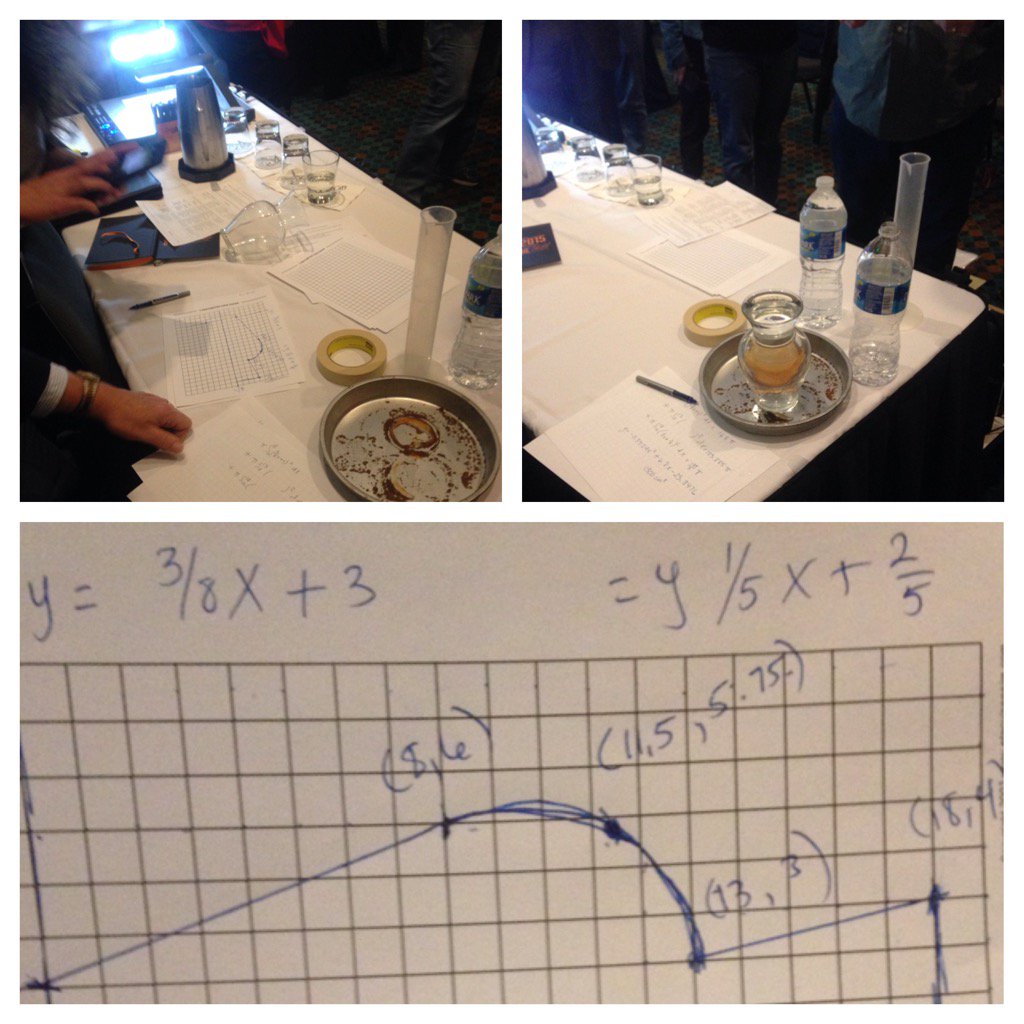
This possibility seems like more of a logistical issue than a conceptual one. I know how to make this a demanding task for kids and have seen amazing applications- from the "Goblet Design" project from my wonderful coworker or the vase volume performance task I had the opportunity to play around with at NCTM Nashville (shout out to Brett Doudican from Coordinated Achievement on this one). It would be fun to 3D print these to scale and then use displacement to check the accuracy of our volume calculations. There are so many ways to give kids constraints and have them develop something amazing. It's task-based and, more importantly, not a project for the sake of doing a project. 


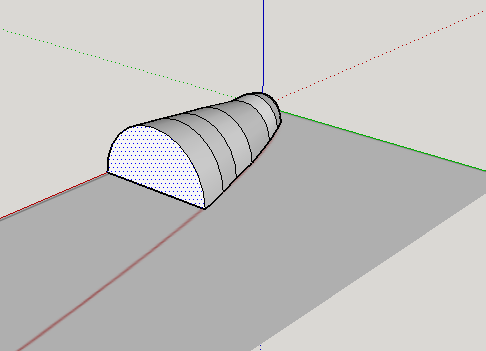
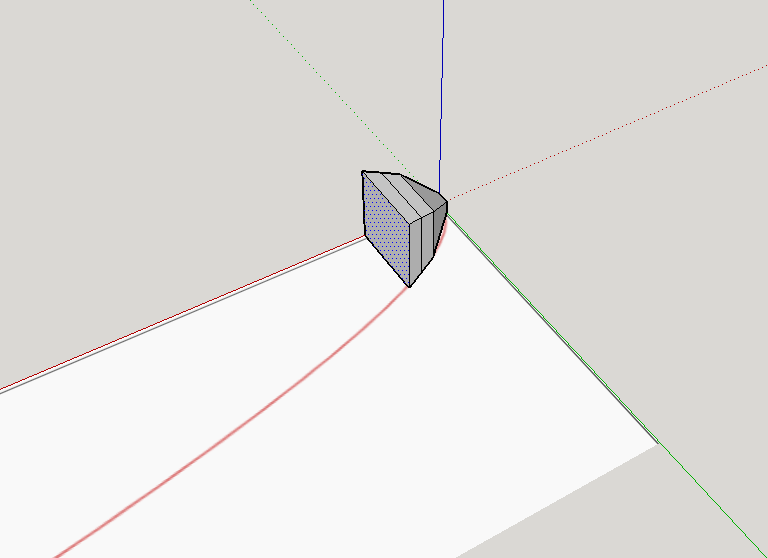
Cross Sectional Volumes

Logistically, I actually think this is easier. In about 15 minutes of playing around I was able to create 2 designs that would model different cross sections. My kids have experience with 3D printing...this wouldn't be mind blowing for them.  My struggle is having them print 3D models seems like the thing I hate most....a project for the sake of doing a project. Might it be a fun way to spend some time after the AP exam? Sure. But if I want to invest any time in this, I want it to be something that's worthwhile mathematically as well. I want something that can be low-floor, high-ceiling since our school ranges in ability level from Honors Calculus to BC Calculus (to a kid who is taking an MIT Quantum Physics MOOC for fun....seriously). Can you tell that I have lofty goals here?

So here's where I need my MTBoS friends...

What sort of tasks and applications do you associate with this topic?

I want to do more than just create a model, so how can I challenge my kids with creating a model within given constraints and do it meaningfully? My coworker and I have been trying to think of how to get kids to apply this concept in the real world and really use the model to serve a purpose. 

Please feel free to share, comment, and question!! We promise to tell you where this road leads us and share any resources along the way!  

Monday, February 15, 2016

The Real Housewives of Pre-Calculus: The Rational Root Theorem

Over the years, I've always found that Rational Root Theorem has been a struggle for kids. They struggle to get all combinations of factors and struggle to remember which goes where. I don't blame them...they can be cumbersome problems with a lot to keep straight. 

Each semester I feel like I did a slightly better job conveying it to the kids, but I think I've finally hit my groove with it. 

Inspiration: Reality TV?

Yes, I said it. I was watching Bravo and marveling at one of the real housewife's closet. Like any proverbial math nerd, my inner "notice and wonder" started coming out....
How many of my salaries would it take to have a closet like that?
- (the age old teacher question)
How did they decide the layout? 
I bet we could make that more efficient
What cost more...the jewelry, the clothes, or the shoes?
How many different combinations could she make with all of it?


That was it!! How many combinations could she make with her outfits?!
It's a problem our kids have been doing since 5th, 6th, 7th grade! 
Here's why:

I start off with a polynomial and we give him a name- Fred?
We mention that we are going to define f(x) as Fred's feet....f must stand for feet, right? And naturally, feet go on the ground. Now, Fred is still working on building his professional wardrobe so he has a limited selection of shirts and pants. Since we've oriented Fred with his feet on the ground, the constant is now his shirts and the leading coefficient is now his pants. 

Let's find all the factors of each. 


So we can see here that Fred has 4 shirts and 2 pairs of pants. We then proceed to make every "outfit" we can out of them.  Add a plus or minus and BAM- we have all our possible rational roots! 

Small? Gimmicky? Yup.
It's been the only way I've been able to get kids to remember it though! And they know better than to put shirts on their legs or pants on their head. It's dramatically reduced the student error of putting factors in the wrong place. I saw a big difference on their individual practice. Unit test is tomorrow...let's see if it makes a difference there! 

Monday, January 25, 2016

Reviewing Inverses

The first few weeks of Pre-Calculus are always a little bit overwhelming for me. The course is designed to fill gaps of knowledge before students get in the ring with Calculus in an AP class or when they're off at college. Great, in theory. However, it means we need to make the gaps glaringly visible so we can address them. Before we tackle any of the really cool concepts, we have to tackle the misconceptions. One that I find the kiddos struggle with the most is inverses.

I've taught inverses so many different ways and always feel like I haven't quite hit the mark. I need a way to efficiently review the concept so we can get into some more skill based practice, but I don't want to do a full blown, hour long exploration. I also don't want to just lecture. I was playing around in Desmos and I decided I'd try a different approach this year. Spend less time trying to remind them of what they've learned in Algebra II myself and give them a little more time to think through it with a partner.  Here are my thoughts right now as to why I'm using Desmos instead of my beloved TI-84:

1) We can examine the concept of an inverse without worrying about the notation or the algebra just yet
The kids always are able to tell me "you just switch x and y," but they often have no idea what an inverse actually is or why switching x and y is important. I like we can build on what they do remember  (switch x and y) to tease out the actual concept. We don't need to get into messy algebra ("YOU EXPECT ME TO USE A LOGARITHM??") to illustrate it....yet. 

2)  The graphs are clear and the commands are user-friendly
We have block scheduling, so I have 2nd semester seniors who haven't seen a graphing calculator since they were first semester sophomores. It's definitely a challenge. Sometimes we spend so much time trying to reintroduce them to the steps ("Okay...2nd....calc....5.....enter....enter....enter") that our intentions get muddled. Yes, I know I need to reteach those, and we will get there. On a conceptual day, I'd rather not. 

We will definitely be examining the fact that the intersections all happen at a point where x=y.....why would that happen? What is demonstrated about the graphs here? This kind of conversations can lead to one to one functions, horizontal line tests, invertibility....all that good stuff. I'm hoping this gives us something concrete to refer back to throughout the year as we repeatedly see inverses in our curriculum. 

This is definitely simple and in the planning stages.  Here's what I have so far. Constructive feedback always welcome! 


Thursday, January 21, 2016

A Day in the Life


So week one of the blogging initiative and I'm already behind (see my last post!).

4:30 am  The alarm goes off. I crankily roll over as I fall back to sleep to the sound of my saint of a husband piling on clothes to take the dog on a 25 degree walk. If he wasn't also a teacher I am pretty sure I'd be late to work every day. 

4:40 am Okay, okay....I get it, I have to get up. And shower. And decide what to wear. And think momentarily about putting on makeup before I say "nahhhhhh" and run out the door. It is the first day of classes....don't want to set the bar too high for the rest of the semester without makeup.

5:15 am Out the door dressed like as eskimo, scrape the car, and be thankful I'm not in my hometown buried under snow right now. I'll take 28 degrees at this point. 

5:35 am  Arrive at work and my competitive side is a LITTLE sad I'm not the first car in the lot. God bless the English teacher who, despite having 2 kids, beats my kid-less self to work every day. 

5:38 am  Quality time with the copier

5:51 am Track down a janitor to remind them that I still don't have enough chairs for my first period that starts in just over an hour. Try to hide my minor panic attack that my seating isn't done and ready yet.  

6:15 am Finally set up the 5 new seats that arrive in my classroom. Basically playing Tetris to fit 5 more 16 year olds into the room comfortably....a nice mathematical challenge for the morning.

7:15 am Homeroom starts. I see these kids maybe 5 days per year total. This will be the longest 10 minutes of my day....trying to keep calm 27 sophomore with whom I have no relationship other than I hand out their schedules and try to keep them quiet enough to hear the announcements a few days per quarter. Try to play off the fact that I've forgotten everyone's name since October, the last time we had homeroom. 

7:30 am - 10:35 am Pre-calc time!  I always start the first day with a fun game ( in this case, Math III Taboo - adapted from Pre-Calculus Taboo) to  pre-assess and get the kids talking and then I give them a sheet of skills they're expected to know from previous courses and give them some time to work collaboratively on them. I spend some time calming the panicking kids who haven't had math in over a year because of block scheduling. 

10:40 am - 12:40 pm AP Calculus Time. I gave back midterms and gave kids time to correct them, identifying and explaining their mistakes. Was going to jump into a new topic today, but first day back from a 5 day weekend and jumping into  a new topic without addressing their mistakes seemed crazy. Take an awkward 25 minute lunch break 30 minutes into class because of our strange 4 lunch schedule. 

12:40- 2:15 pm Planning! I've never had 4th period planning before and I'm not sure how I feel about it yet. It's a good opportunity to reflect on the day and make tweaks, but also to get ready for tomorrow. It also includes all the chores of the day....check mailbox, file papers, walk to office to pick up package with turns out to be the greatest thing a parent could ever drop off...a bulk store's biggest pack of Kleenex! 

Got copies ready for tomorrow, sent lesson plans for Friday and Monday to have them brailled, nursed my Diet Coke to help try to stay focused, set up my new Canvas courses for the semester, sent some parent emails, etc. 

I think it also goes without saying that I refresh the weather report about 35 times during this person too, as some reports are saying we'll get a dusting and some are saying we're going to get 15 inches. 

2:15 pm The last bell rings. New people are starting their afternoon duties and I somehow didn't get parking lot duty. Needless to say, I'm feeling like...


2:40 pm The time I mean to leave school to let me poor puppy out after being home alone since 5:15 am. 

3:10 pm The time I actually manage to sneak out the door. 

3:30 pm Arrive home, long dog walk as an excuse to play in the flurries we are getting right now, settle in for some serious lesson planning to make sure I have time later to relax a little. 

7:00 pm  Realize I've been snacking for 5 hours and actually eat dinner, torture my husband through an episode of Vanderpump Rules, and get ready for bed.

8:45 pm In bed. I realize this is embarrassing, but it's #teacherlife. Alarm is set for 4:30 am...it's coming fast. 

Tuesday, January 19, 2016

Balancing Act

Saying I've had a trying last 5 months would be putting it nicely...an understatement equivalent to saying that you should probably not put the buffalo chicken dip near me at a party if you want anyone else to get some of it (I'm good at sharing with others until it involves cheese and buffalo-y goodness).   It's been unbelievably challenging personally and the thing that's hit me the hardest is the way it has made me feel as a professional. We go into this profession because we love to help. If you're teaching and you don't love kids and seeing them light up, you need to find another line of work. We work 60....70....80 hour weeks for the first few years of our career to try to prove ourselves. We do all those things you see teachers do in the movies- bring kids things from your own home to make sure they don't go without, commiserate with kids who are struggling with situations that are more than just academic, and get truly invested in a group of munchkins who you will have to say goodbye to in just a few short weeks.

When life happens, it's hard to strike a balance between that "movie" teacher we want to be and the reality of what we can handle. I had to spend a few weeks working to my contract hours only and it's almost unimaginable the amount of things that couldn't get done- the grading, the tutoring, the formative assessment and feedback, the parent emails, the committee meetings, the re-writing of lessons to help them to meet the needs of different kids, the club meetings that had to be cancelled, the bathroom breaks (yes, those and lunch go right out the window first). I don't think in my years of trying to prove myself I realized just how much of my own time I was giving up to be the type of teacher I wanted to be. And I didn't realize the guilt I'd feel when I needed to invest my own time in myself and not in my kids. 


I'm still working on getting back in balance....on being able to take some time out of my own personal life to let myself heal without feeling like I'm letting kids down. On being able to be okay with working only 50 hours a week. If anyone has found a magic pill to cure this, let me know. Until then, I'm taking it one day at a time and knowing that I'm doing the best I can. I'm also saluting everyone who gets up every morning and smiles at kids as they walk into homeroom while putting aside their concerns about their own children, their own family, a chronic illness,  a whole history of personal tragedies and fears. This career is not for the faint of heart and the only way to sustain it is to find a way to be both a teacher and a person. 


Sunday, December 6, 2015

Mathematically Correct vs. Mathematically Helpful: Polar & Rectangular Forms

There are some topics, especially in Pre-Calculus, where I feel like I need to help kids realize the difference between making mathematically correct moves and making mathematically helpful moves. Trigonometric identities is one of these. Converting between polar and rectangular equations is another. If you present it the right way, kids appreciate the elegance of a mathematical "trick"- something one of my beloved mathematics professors would call a "cute" move. These moves the ones that are more than just correct- they are actually helpful in getting you towards your final goal in a problem. 

I have always found that in these kinds of situations learners respond in one of two ways:
either with excitement and curiosity or resentment and bitterness. Students who have come to my class from a previous course that emphasized rote memorization and procedures sometimes feel like they're "doing everything right" but still can't come up with the right answer- a huge source of frustration. Students who have been asked to reason on their own, look for patterns, and solve puzzles in previous courses often find these types of problems invigorating and exciting; they live for the "thrill" of discovering the right move to make.

One way I've tried to combat this and get everyone more on the "I can solve it!" page is to try to make these problems into puzzles whenever possible. I love the way this Time Magazine article discussed the human desire to problem solve:
Human brains have an extreme form of consciousness: they’re ravenous for new innovative solutions to problems in the world, ravenous for optimizing our lives, for building pyramids of knowledge. 
I have found that the more I try to celebrate the "cute" and elegant mathematical moves and help kids see the repeated reasoning that goes into these problems, the less resentful they become. 

Here is a puzzle activity for converting polar and rectangular equations. Directions I give the students: 


I have partners sort them into groups and try to put the "steps" in order. They then need to create a "booklet"  (fold a piece of paper in half so there are 4 sections- 2 on the front, 2 on the back) with one problem on each "page", glue the steps down in order, and explain the reasoning between each step in their own words. I love the conversations I hear between partners, especially on a problem where they "just know" what the next line should be because it seems correct, but they need to think about how to justify it. This really helped my kids dig into the "why" of these sorts of problems.