Showing posts with label mtbos. Show all posts

Friday, February 19, 2016

Tasks vs. Projects in Calculus

So it's Friday afternoon and in an effort to really knock one out of the park (and avoid the pile of ungraded tests staring back at me), I have some serious thoughts going on about my next Calculus PBL, which I am trying to design with a fellow AP Calculus teacher at my school. I am lucky enough to teach in a STEM program that received a huge federal grant and, as a result, has access to lots of things others don't. Too often I'm thinking of ideas without enough time to actually go through the enormous process that is ordering anything through aforementioned federal grant. So here goes nothing:

Disclaimer: This is a brainstorm....brain dump....random collection of ideas that I hope other amazing AP Calc teachers might be able to expand upon? I offer no solutions in this post...just questions.

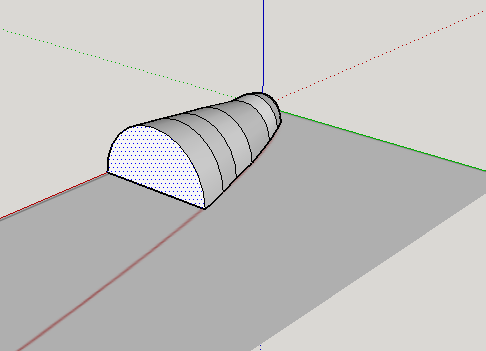
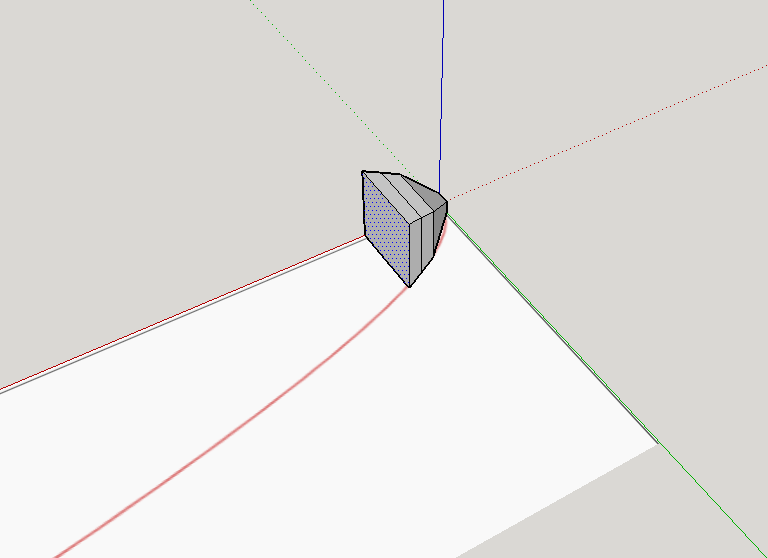
We are getting 2 new 3D printers next week and have a training on using them (YES!) and there is obviously a direct relationship to all the applications of volume we discuss in AP Calc. I've done some searching....which always just leads to more questions and ideas. I started from watching these 2 videos:


Solids of Revolution
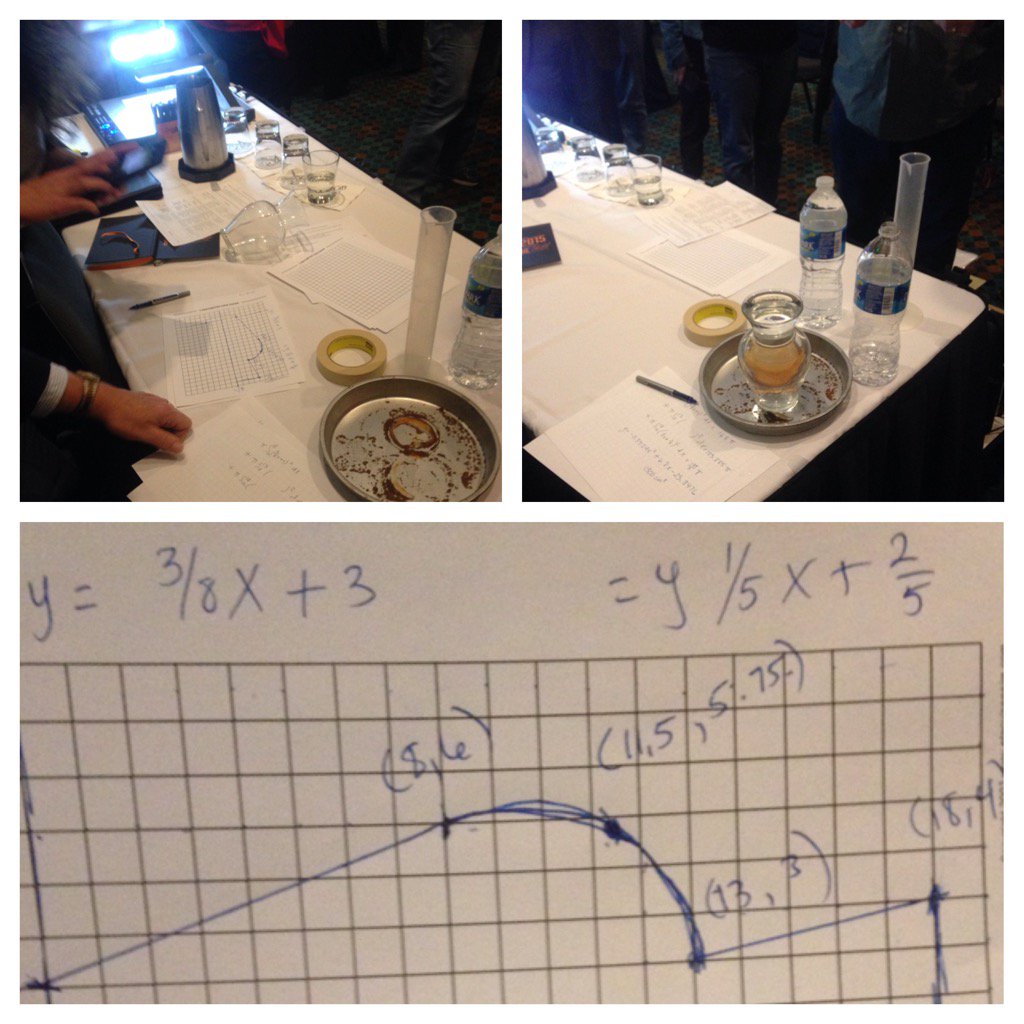
NCTM Performance Task
This possibility seems like more of a logistical issue than a conceptual one. I know how to make this a demanding task for kids and have seen amazing applications- from the "Goblet Design" project from my wonderful coworker or the vase volume performance task I had the opportunity to play around with at NCTM Nashville (shout out to Brett Doudican from Coordinated Achievement on this one). It would be fun to 3D print these to scale and then use displacement to check the accuracy of our volume calculations. There are so many ways to give kids constraints and have them develop something amazing. It's task-based and, more importantly, not a project for the sake of doing a project. 


Cross Sectional Volumes

Logistically, I actually think this is easier. In about 15 minutes of playing around I was able to create 2 designs that would model different cross sections. My kids have experience with 3D printing...this wouldn't be mind blowing for them.  My struggle is having them print 3D models seems like the thing I hate most....a project for the sake of doing a project. Might it be a fun way to spend some time after the AP exam? Sure. But if I want to invest any time in this, I want it to be something that's worthwhile mathematically as well. I want something that can be low-floor, high-ceiling since our school ranges in ability level from Honors Calculus to BC Calculus (to a kid who is taking an MIT Quantum Physics MOOC for fun....seriously). Can you tell that I have lofty goals here?

So here's where I need my MTBoS friends...

What sort of tasks and applications do you associate with this topic?

I want to do more than just create a model, so how can I challenge my kids with creating a model within given constraints and do it meaningfully? My coworker and I have been trying to think of how to get kids to apply this concept in the real world and really use the model to serve a purpose. 

Please feel free to share, comment, and question!! We promise to tell you where this road leads us and share any resources along the way!  

Thursday, September 24, 2015

Rational Functions Challenges!

I always find my Pre-Calculus class the most challenging to teach at this time of year. Yes, even more so than prepping for AP Calculus for the first time and teaching a blended class with 50 students and about 10,000 things to grade every night. 

Why, you ask?

We run on block scheduling and there are few things which I think are more of a challenge for mathematics teachers than the gaps in background knowledge that happen from skipping semesters (or YEARS) of math in high school. By the time the kiddos get to me in 11th or 12 grade, all those "must know" skills have been forgotten. My goal is to try to remind them of those skills without having to reteach the concept completely. I know it's in there....we just need to bring it back to the surface!

We are currently studying rational functions, a topic which is so vital to their study of limits and later calculus. The whole idea of discontinuities....so important! 

This year for some of the review topics, I'm using some classroom flipping (with videos I made with Educreations). Kids who remember the material can speed through these and demonstrate mastery while kids who need the extra remediation have the opportunity to get it. My kids had 2 "flips" last night- a brief video on holes vs. asymptotes and one on horizontal asymptotes. Having the preview of these topics allows me to group the kids strategically and have them really practice in class. 

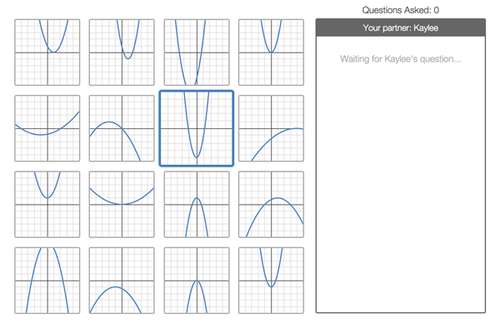
Desmos PolyGraph Activity 
Think "Guess Who?" for functions (the one pictured above is quadratics)! I loved that it let me move around the room and assess the comfort level with mathematical vocabulary.

We had a big discussion about what questions would be considered appropriate for pre-calculus level students. Here's what we decided...


From the teacher perspective, I could follow each conversation and make sure they were using academic vocabulary. I was able to circulate around the room and listen and ask probing questions to kids who needed it. It was competitive, but fun! Every single one of my students said on their feedback form for the activity they'd want to do it again.

What the kiddos are saying....


"It made me really think about the characteristics of the graph/function."

"It was fun and helped strengthen my math terminology" 

"I like the fact that you can ask questions to better understand the topic and also get asked the questions. It's easier to understand and more fun with being partners with some random person :)"

"It was a fun, creative way to show what we know with out the stress of a quiz, or test."

Once I felt confident that they had mastered the vocabulary and were ready for more collaborative practice,  the students had to complete a graphing mini-project on my giant laminated graph paper! The first 2 questions were a mini-review from rational expressions and equations and the 3rd was the actual mini-project.


Now to grade them all....
(Is the domain and range bothering anyone else?? Have some more work to do with that group, still!)